

We have three dogs, which means I have poop bags with me all the time (IYKYK). The brand I use (Earth Rated - made from a high % of post-consumer recycled plastic and a B-Corp; a fun find here in southern MX) has a cool little detail. When a roll gets down to three bags left, they alert you with a little sticker — like this:
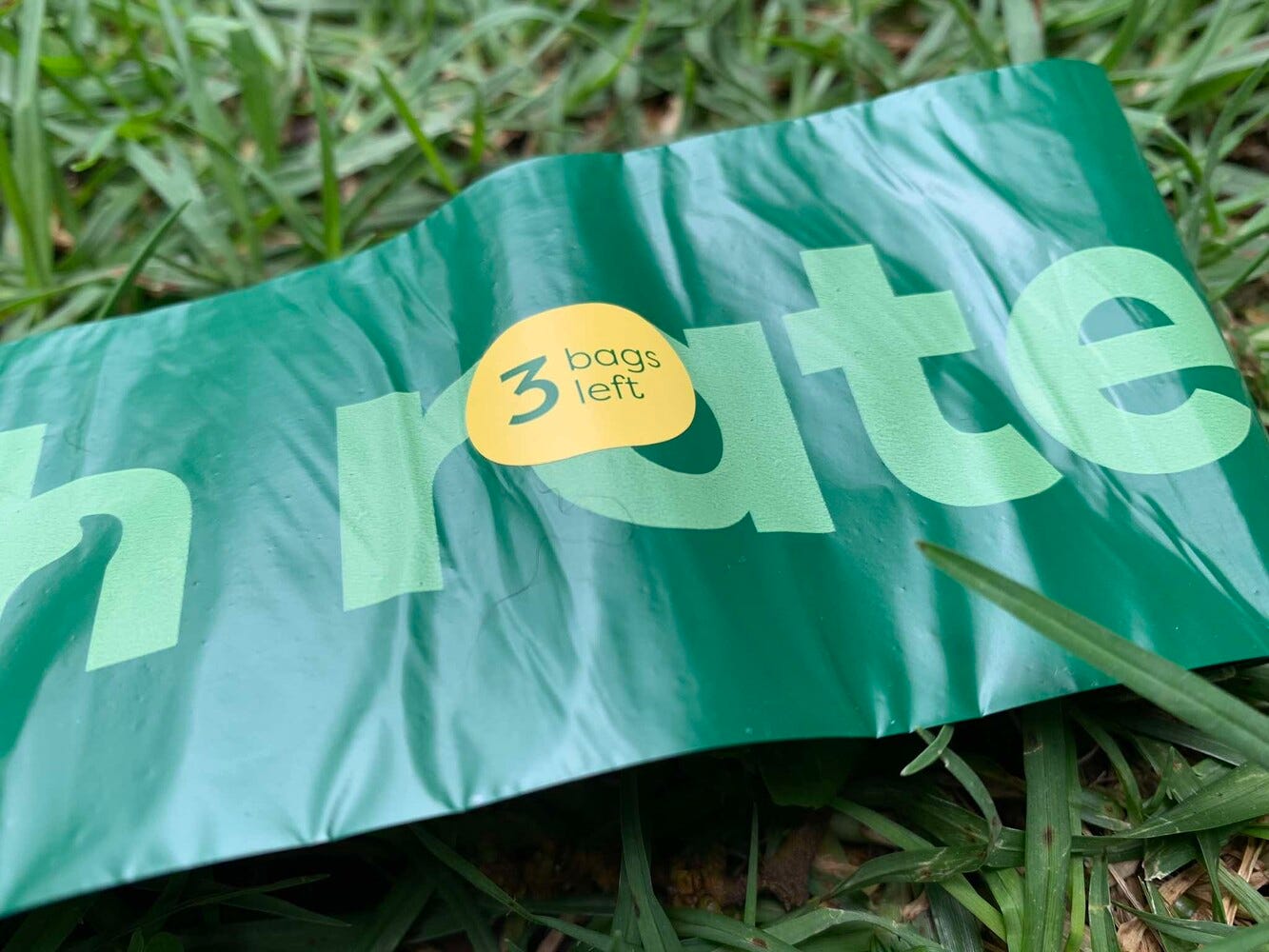
It’s not an especially necessary detail, but it’s a neat one.
I like looking for weird connections between things, and this little product detail got me thinking about how often we need little alert systems integrated into our personal and professional lives. Small, early-warning signs that we’re running low on capacity, or to alert us when something is about to go off track?
Catching Chaos Before It Happens
In project management, if we’re doing our best, most collaborative work, those alerts are built into our project plans.
💟 We’re architecting those plans from the outset hitched to clear goals and outcomes we have in mind, reflecting the resources we have available to us.
💟 We’re doing regular sprints or check-ins.
💟 We’re creating dashboards for transparency.
💟 We’re automating things and integrating tools to reduce the points of friction and cognitive load on our teams.
💟 We’re communicating a lot (inside the PM platform or with whatever async tools you use).
Those things — whether you’re a fully in-office culture, fully remote, or in between — are wildly helpful to keep projects on track AND adjust to the unexpected.
The curve balls. The things that can cause R&Rs (roles and responsibilities) to get blurry and make our To Do cups overflow more easily (which can especially happen in smaller or more resource-challenged companies or organizations).
Reading the Room
Sometimes it's our systems need updating and refining to prevent overwhelm or things falling through the cracks.
But, many times, the most important alerts aren’t built into your PM platform (or they’re not obvious). They come from paying attention to the more subtle, human signals in your team or yourself. Those signs can include:
🚨 Reduced communication — or even periods of ghosting (not to be confused with “I’m fine. I’m focused and humming along autonomously”)
🚨Over-delegating tasks to others
🚨Visible signs (or ones you notice internally at a body level) of frustration and curtness
🚨 Checking out, creatively or collaboratively
In our house, we call it “running out of spoons.”
What Are Your ‘3 Bag’ Warning Systems?
So, just like the “last-three-bags” sticker that is the hero analogy of story here, we need capacity alerts in our personal and work lives.
For me, personally speaking, that most importantly starts with being body aware.
Vital.
Recognizing that I’m crossing the Styx into the threshold of overwhelm helps me see when I’m trying to do too much in a given day, or if the way I’m going about a task could be better, or how I show up as leader.
🌱 If I do the work of taking breaks throughout the day, doing body check-ins (meditation, mindfulness, breathwork, somatic work like I’ve learned from Ixchel Lunar and Luis Mojica/Holistic Life Management), that’s the ultimate reset. It helps me take the blinders off and assess more holistically.
🌱 Ixchel and our pups are great mirrors for me, especially when I’m out of balance. And Ixchel will call me on my shit. I’m grateful.
🌱 I’m a compulsive do-er, and it’s my constant practice being comfortable enough to say “I don’’t know” or to set boundaries. “I can’t meet today, what about tomorrow?” or “Is this urgent? If not I can commit to doing it by XX date”.
All of those things are my personal “3 bags left” tactics that help me stop, assess, adjust, and negotiate with colleagues or clients as need (rather than stop, drop, and roll 🔥 IYKYK).
As a project leader of a lean, fully remote team (double complexity challenge accepted!), I try to do these things regularly to practice awareness:
❣️ Being present and noticing as an integral, devotional thing. This as important as the system or the project. Probably more so.
❣️ Having well structured project plans and systems, but building enough flexibility into those that we can assess and adjust as needed.
❣️ Using the tools and communication preferences that work for us. Invaluable to have those clearly defined and mapped out going into any group project.
❣️ Within those, trusting my team to do good work and supporting them asking for help when they need it.
❣️ Doing regular weekly team and 1:1 check-ins. Nothing heavy. Just casual ‘how are you doing?’
❣️ Good async hygiene. I can tend to leave Slack open too much and, because my Human Design Strategy is To Respond, I can do that all day - sometimes to mine and my team’s detriment.
By recognizing when we’re close to running out of capacity, we can take proactive steps to stay on track and avoid last-minute scrambles. After all, it’s much easier to swap out a roll of bags when you’re down to three than to deal with the mess when you’ve run out completely.
What about you? What are your '3 Bags' tools?
If you are looking for help or expertise with your projects, operations, or remote workforce strategies and tactics, let's chat! Drop a comment below or an email at jaimeywb@gmail.com.